AC Capacitor Replacement Cost by Type
Your air conditioner or heat pump uses capacitors to give the compressor and fan motors the jolt they need to start and keep running. The part itself is cheap. What you’re really paying for is the service call, diagnosis and a trained technician working safely around high-voltage components.
| Capacitor type | Part only (retail) | Typical installed cost | What it powers |
|---|---|---|---|
| Dual run capacitor | $15 – $45 | $150 – $380 | Compressor and outdoor fan (most common) |
| Single run capacitor | $8 – $30 | $140 – $350 | Compressor or fan motor alone |
| Start capacitor | $9 – $25 | $140 – $350 | Extra boost at compressor start-up |
| Blower motor capacitor | $9 – $12 | $120 – $300 | Indoor blower fan |
| Hard start kit (add-on) | $15 – $75 | $135 – $250 | Helps an aging compressor start |
The dual run capacitor is the part most technicians replace on central AC and heat pump condensers, because one canister serves both the compressor and the condenser fan. Most homeowners pay about $250 for that job during regular business hours.
Published averages range from about $170 to $300, and flat-rate companies sometimes quote $300 to $600 when the diagnostic fee and a premium-brand part are bundled in. That spread is why it pays to ask how the company prices the job before the technician arrives.
Cost Breakdown: Materials vs. Labor
Labor and the trip charge make up most of the bill. A capacitor swap itself often takes 30 minutes to an hour once the problem is diagnosed.
| Item | Typical cost |
|---|---|
| Capacitor part | $8 – $45 retail (more with contractor markup) |
| Service call / diagnostic | Often included; some companies charge separately |
| Labor (HVAC tech, about 1 hour) | $75 – $150 per hour |
| Typical total, regular hours | $150 – $450 |
Many companies price repairs from a flat-rate book instead of by the hour. That means a capacitor may carry a fixed price regardless of how long it takes. Neither method is wrong, but you should know which one you’re getting.
Other Factors That Affect the Price
Timing: evenings, weekends and heat waves
Capacitors fail most often in hot weather, exactly when HVAC companies are busiest. After-hours, weekend and holiday calls usually carry a premium on top of the normal price. If the house is safe and cool enough, waiting for a weekday appointment can save real money.
Diagnostic fee
Some contractors charge a separate diagnostic or trip fee, while others fold it into the repair price. Ask whether the fee is credited toward the repair if you go ahead with it.
Capacitor size and brand
Capacitors are rated in microfarads (µF) and voltage. Larger or specialty ratings, and higher-grade brands, cost a bit more. The difference is small compared with labor.
Additional failed parts
A capacitor that failed may have taken other components with it, or it may have failed because of another problem. Contactors, fan motors and a struggling compressor are common companions. A burnt-out fan motor can cost $200 to $700 to replace, and compressor replacement can run into the thousands.
Heat pump vs. central AC
Heat pump outdoor units use the same kinds of capacitors as air conditioners, and replacement prices are similar. The difference is that a heat pump runs year-round, so its capacitor works more hours. A failure in winter can leave you on backup heat strips, which are expensive to run, so it’s worth fixing promptly.
Accessibility of the unit
Most condensers sit on a pad beside the house and are easy to reach. Rooftop units, tight side yards and attic air handlers (for blower capacitors) can add time to the visit.
Region
Labor rates are higher in big metro areas and parts of the Northeast and West Coast. In hot southern markets, capacitor replacement is such a routine call that competition can keep prices reasonable.
AC Capacitor Cost vs. Other Common AC Repairs
When an AC quits on a hot day, the capacitor is one of the cheapest possible culprits. Here’s how it compares with other repairs a technician might find:
| Repair | Typical cost |
|---|---|
| Capacitor replacement | $150 – $450 |
| Thermostat replacement | $150 – $350 |
| Refrigerant recharge | $200 – $400+ |
| Fan motor replacement | $200 – $700 |
| Refrigerant leak detection and repair | $200 – $1,500 |
| Fan coil replacement | $600 – $2,000 |
| Compressor replacement | $750 – $2,800 |
If a technician suggests a costly repair, ask them to confirm the capacitor tested good first. It’s a quick check with a meter.
What the technician does on a capacitor call
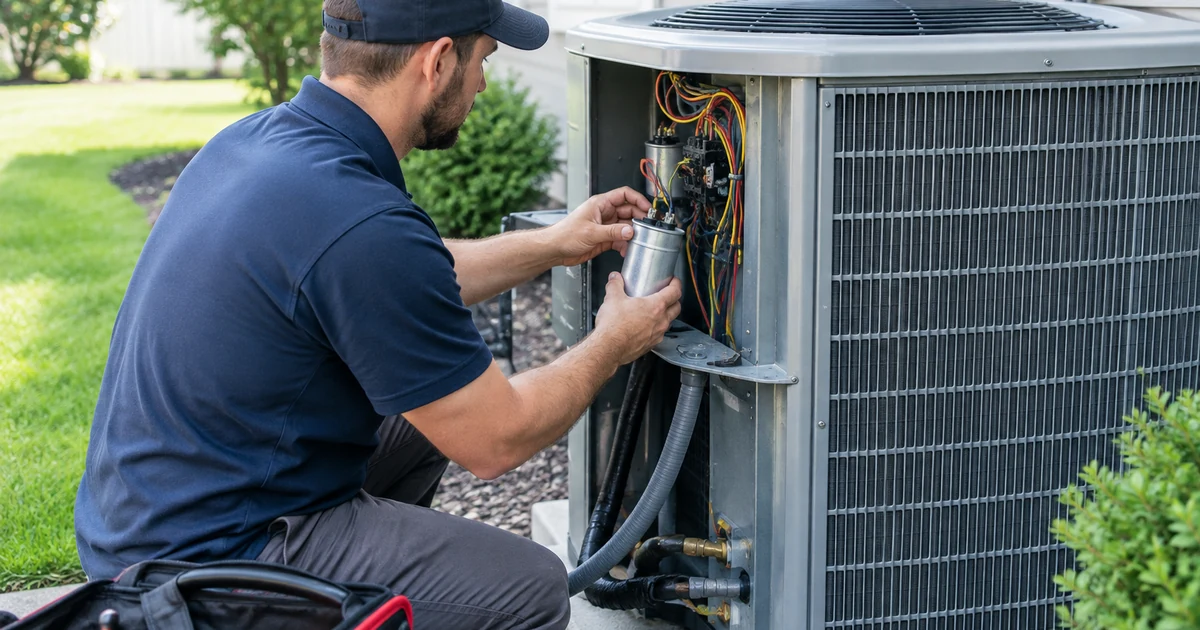
- Shuts off power at the thermostat and outdoor disconnect.
- Safely discharges and tests the old capacitor’s microfarad reading against its rating.
- Installs a replacement with matching µF and voltage ratings and reconnects the wiring.
- Restarts the system and checks amp draw on the compressor and fan motors.
- Looks for related issues such as a pitted contactor or a failing motor.
Before you hire: get at least three written, itemized quotes from licensed and insured local pros. Prices for the same job often differ by 30% or more, and comparing line items is the fastest way to spot padding or missing work.
Signs Your AC Capacitor Is Failing
A bad capacitor is one of the most common reasons an AC stops cooling. Watch for these symptoms:
- Humming outside, but the fan doesn’t spin. The motor is getting power but can’t start.
- AC blows warm air while the indoor blower keeps running.
- The system takes a while to start or shuts off shortly after starting.
- Clicking noises from the outdoor unit when it tries to start.
- A bulging or leaking capacitor visible inside the service panel (a technician should check this).
- Rising energy bills as weak capacitors make motors work harder.
If the outdoor unit hums without running, turn the system off at the thermostat. Letting the compressor strain against a dead capacitor can overheat it and turn a $250 repair into a much bigger one.
DIY vs. Hiring a Pro
You’ll find plenty of videos showing homeowners swapping a capacitor for $60 to $100 in parts and tools. It can be done, but it carries real risk. Capacitors store an electrical charge even with the power off and must be safely discharged before handling. Wiring it back incorrectly can damage the compressor or fan motor.
If you’re not comfortable working with high-voltage electrical components, hire a licensed HVAC technician. A pro will also test the rest of the system, which matters because a failed capacitor is sometimes a symptom rather than the root cause. Check your equipment warranty, too; some manufacturers require licensed service for coverage.
Capacitor or something bigger?
A capacitor is a cheap repair even on an old system, so it almost always makes sense to fix. But if your AC or heat pump is 12 to 15+ years old and the technician finds a failing compressor, leaking refrigerant or repeated breakdowns, it may be time to price a replacement. Our heat pump installation cost guide covers full system prices, and if the furnace side is also aging, see furnace replacement cost.
How to Save Money on AC Capacitor Replacement
- Book during regular hours whenever you safely can to avoid after-hours premiums.
- Ask for the total price upfront, including any diagnostic or trip fee, before work begins.
- Use a maintenance plan. Many plans include priority service and discounted repairs, and a yearly tune-up (typically $75 to $200) catches weak capacitors before they fail.
- Replace a weak capacitor early. A technician can test microfarad readings during a tune-up; swapping a borderline part then avoids an emergency call later.
- Be wary of upsells. A hard start kit can help an aging compressor, but it isn’t needed on every system. Ask why it’s recommended.
- Compare flat-rate prices. Calling two or three local companies for a quick quote is easy for such a common repair.
Outdoor units also rely on steady, correctly sized power. If you’re adding a big new load like a heat pump or EV charger to an older home, read up on electrical panel upgrade cost first.
Frequently Asked Questions
How much should an AC capacitor replacement cost?
Most homeowners pay $150 to $450, and about $250 is typical for a dual run capacitor during business hours. Quotes well above $500 for a capacitor alone are worth questioning or comparing.
Why is AC capacitor replacement so expensive when the part is cheap?
You’re paying for the trip, diagnosis, the technician’s time and training, and the liability of working on high-voltage equipment. Many companies also use flat-rate pricing that bundles these into one price.
Can I replace an AC capacitor myself?
Some homeowners do, but capacitors hold a dangerous charge even with power off and must be discharged safely. If you’re not experienced with high-voltage electrical work, hire a licensed HVAC technician.
How long do AC capacitors last?
Lifespan varies widely. Heat, power surges and age all wear capacitors down, so units in very hot climates tend to go through them faster. A technician can test a capacitor’s microfarad reading during a tune-up to catch one that’s weakening.
Will a bad capacitor damage my AC?
It can. A compressor or fan motor straining to start without a working capacitor can overheat. Turn the system off if the outdoor unit hums without running, and call for service.
What's the difference between a start and a run capacitor?
A start capacitor gives a short boost to get the motor turning, then drops out. A run capacitor stays in the circuit to keep the motor running efficiently. A dual run capacitor serves both the compressor and fan in one part.