Septic Tank Replacement Cost by Tank Size
Tank size is set by the number of bedrooms, not by how many people live in the house, and local health codes spell out the minimum. The tank itself is only part of the bill. Excavation, removing or abandoning the old tank, connecting inlet and outlet lines, permits and inspection make up most of the total.
| Tank size | Typical home | Tank price (concrete) | Replacement installed* |
|---|---|---|---|
| 750 gallons | 1–2 bedrooms | $700–$1,200 | $2,800–$6,500 |
| 1,000 gallons | 3 bedrooms | $1,000–$1,500 | $3,500–$8,000 |
| 1,250 gallons | 4 bedrooms | $1,200–$1,800 | $4,000–$9,000 |
| 1,500 gallons | 5 bedrooms | $1,500–$2,500 | $4,500–$10,000 |
*Tank-only replacement reusing a working drain field, including excavation, old tank removal or abandonment, connections and a typical permit.
Angi puts septic tank-only replacement at $3,000 to $10,000, and Bob Vila lists a concrete tank at $2,300 to $6,500 with installation. For a standard 1,000-gallon tank serving a three-bedroom home, most homeowners pay about $5,500. If the drain field has failed too, a combined replacement typically lands between $5,000 and $20,000, depending on the type of field your soil requires.
Cost by Tank Material
| Material | Tank price | Pros | Cons |
|---|---|---|---|
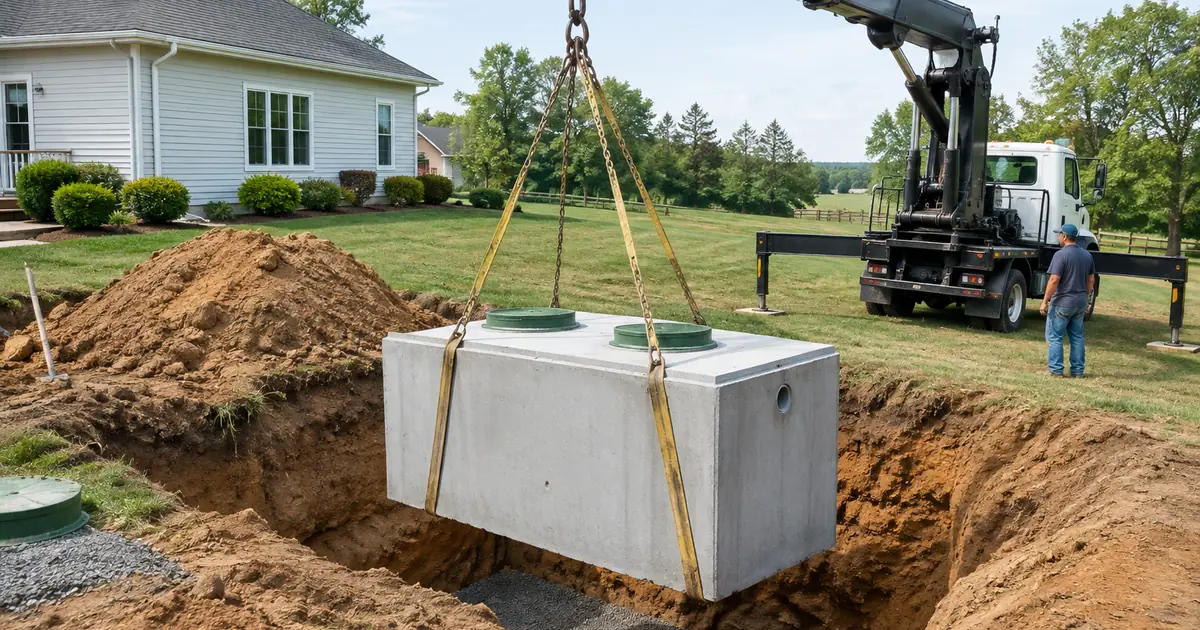
| Concrete | $700–$3,000 | Heavy and very durable; most common | Needs a crane or boom truck; can crack if poorly made |
| Plastic (polyethylene) | $500–$2,500 | Light, rust-proof, easy to get into tight yards | Can shift or float in high groundwater; must be installed carefully |
| Fiberglass | $1,200–$2,000 | Won’t corrode; lighter than concrete | Fewer suppliers; can also float if not anchored |
| Steel | Rarely installed | — | Prone to rust; HomeGuide notes steel tanks are no longer installed |
Plastic tanks can lower the total if the site is hard to reach with heavy equipment. In most other cases, concrete is the default, and some jurisdictions restrict which materials are allowed.
Cost Breakdown: Materials vs. Labor
Labor typically accounts for 50% to 70% of a septic project, according to Angi.
- New tank: $1,000–$1,500 for a 1,000-gallon concrete tank
- Excavation and installation labor: $1,600–$4,500; equipment time runs $100–$300 per hour
- Old tank removal or abandonment: pumping plus crushing and filling in place, or hauling it out; contractors bill $45–$200 per hour for removal work
- Permits and inspection: $250–$650 for a tank permit; $450–$2,300 when a full system permit and design review are required
- Risers and lids: $200–$400 for a riser that brings the access to grade
- Yard restoration: sod at $1–$2 per sq ft, or regrading at $1,000–$3,300
Septic System Repair Costs
Many septic problems don’t require a new tank. HomeGuide puts the average septic repair at about $1,900, with most jobs between $600 and $3,000.
| Repair | Typical cost | Notes |
|---|---|---|
| Tank pumping | $300–$700 | Routine every 3–5 years for most households |
| Baffle repair or replacement | $250–$900 | Broken inlet/outlet baffles let solids flow to the drain field |
| Effluent filter replacement | $200–$300 | Protects the drain field from solids |
| Lid replacement | $150–$600 | Cracked lids are a safety hazard |
| Effluent or lift pump replacement | $500–$1,300 | For systems that pump uphill or to a mound |
| Tank inspection / camera inspection | $150–$450 / $125–$500 | Often required at home sale |
| Leach field rejuvenation | $1,000–$5,000 | Jetting, aeration or bacterial treatment for slow fields |
| Leach field replacement | $3,000–$15,000 | Conventional fields at the low end; mound systems higher |
A cracked concrete tank can sometimes be sealed, and a broken baffle is a small repair. Replacement makes sense when the tank is collapsing, badly corroded, too small for the house, or when an inspector or health department requires it.
Other Factors That Affect the Price
Drain field condition
The biggest question in any septic replacement is whether the drain field still works. If it’s saturated or failed, you’re looking at a field replacement on top of the tank, and Angi puts a drain field alone at around $7,000.
Soil and site access
Rocky ground, high groundwater and tight lots slow excavation. If a boom truck can’t reach the tank location, crews may need smaller equipment or a lighter plastic tank.
Permits, perc tests and design
A like-for-like tank swap is often permitted simply. Changing the system, enlarging it or moving it can trigger a soil or percolation test ($600–$2,000) and engineering at $125–$200 per hour.
Code upgrades
Local rules may require risers, an effluent filter, a larger tank for your bedroom count, or a two-compartment design when a tank is replaced. Ask what your county requires before you get quotes.
Type of system
Conventional gravity systems are the least expensive. Aerobic treatment units, mound systems and other alternative designs cost more to replace and maintain, with mound systems often reaching $10,000 to $20,000.
What to Check in a Septic Replacement Quote
Septic quotes vary widely in what they include, which makes the lowest number misleading. Before you sign, confirm each proposal covers:
- Tank specs: capacity in gallons, material, and whether it’s single- or two-compartment
- Old tank handling: pumping, then removal or crushing and filling in place as your county requires
- Connections: new inlet and outlet pipes, and whether an effluent filter is installed
- Risers and lids to grade, which make future pumping cheaper and faster
- Permits, inspection and any design fees
- Drain field evaluation: whether the installer tested it, and what happens if it fails once the tank is replaced
- Backfill and restoration: rough grade only, or topsoil and seed or sod
Ask how long the job will take and whether you can use water in the house during the work. A straightforward tank swap is often completed in a few days once the permit is issued, but weather and inspection scheduling can stretch that out.
Replacement Cost by System Type
When the drain field has to be replaced along with the tank, the type of system your soil and lot allow sets the budget. Figures below are typical totals for a full replacement:
| System type | Typical replacement cost | When it’s used |
|---|---|---|
| Conventional (anaerobic) gravity system | About $5,000 | Soil drains well and there’s room for a standard field |
| Aerobic treatment unit | About $7,000 and up | Poor soil, small lots or sensitive water nearby |
| Evapotranspiration | About $8,000 and up | Dry climates with shallow soil |
| Mound system | $10,000–$20,000 | High water table or shallow bedrock |
Your local health department decides which type is allowed. If your existing system is an older design that no longer meets code, a replacement may have to be upgraded, which is the most common reason septic budgets jump.
Before you hire: get at least three written, itemized quotes from licensed and insured local pros. Prices for the same job often differ by 30% or more, and comparing line items is the fastest way to spot padding or missing work.
Signs Your Septic Tank Needs Repair or Replacement
- Slow drains or gurgling throughout the house, not just in one fixture
- Sewage odors in the yard or near the tank
- Soggy ground, standing water or unusually green grass over the tank or drain field
- Sewage backing up into the lowest drains
- An inspection that finds cracks, a collapsed baffle or a tank that won’t hold water
Slow drains with no yard symptoms may simply mean the tank needs pumping or there’s a clog in the main line. Get the tank pumped and inspected before agreeing to a replacement.
DIY vs. Hiring a Pro
Septic tank replacement isn’t a DIY project. Most areas require a licensed installer, a permit and an inspection before the tank is covered. Septic tanks also hold toxic gases, and entering or working over an open tank is dangerous. Homeowners can handle the prep: locating the tank, marking sprinkler lines and clearing access for equipment.
How to Save Money on Septic Tank Replacement
- Diagnose before replacing. Pumping and an inspection ($150–$450) can reveal a repairable baffle or clog instead of a failed tank.
- Keep the drain field healthy. Don’t drive or park on it, divert gutter downspouts away from it, and avoid planting trees nearby.
- Get at least three quotes from licensed installers, and make sure each one includes permits, old tank abandonment, risers and yard restoration.
- Ask about local assistance. Some states, counties and the USDA’s rural housing repair programs offer grants or low-interest loans for failing septic systems; eligibility varies.
- Stick with the same location when it’s allowed. Reusing the existing excavation and drain lines usually costs less than moving the tank.
- Pump on schedule. Pumping every 3 to 5 years is the cheapest way to extend the life of both the tank and the field.
If your home also relies on a private well, plan system work so the two stay properly separated; our guide to well pump replacement covers that side of rural plumbing.
Frequently Asked Questions
How long does a septic tank last?
Lifespan depends on material, soil and maintenance. Concrete tanks are known for their durability, while the drain field is often the first component to fail; cost guides put its average life at about 20 to 25 years with proper maintenance.
Can you replace a septic tank without replacing the drain field?
Yes, if the drain field still drains properly. Many replacements swap only the tank and reconnect the existing lines. An inspector or installer should confirm the field is working before you commit.
How much does it cost to pump a septic tank?
Pumping typically costs $300 to $700, depending on tank size, access and region. Most households need it every 3 to 5 years.
How much does it cost to replace septic tank baffles?
Baffle repair or replacement usually costs $250 to $900. A missing or broken outlet baffle lets solids escape into the drain field, so it’s worth fixing promptly.
Does homeowners insurance cover septic tank replacement?
Usually not when the cause is age, wear or lack of maintenance. Some policies cover damage from sudden events, and some insurers sell service-line or septic endorsements. Check your policy and ask your agent.
Do I need a permit to replace a septic tank?
In most areas, yes. Local health departments typically require a permit and an inspection before the tank is buried. Tank permits commonly run $250 to $650, more if a new system design is required.