Roof Repair Cost by Type of Repair
The kind of damage is the biggest driver of roof repair cost. A cracked pipe boot or a handful of blown-off shingles is a short visit, while rot, sagging, or storm damage can mean new decking, underlayment, and framing work. The ranges below are national averages for professionally installed repairs on a typical asphalt shingle roof.
| Repair type | Typical cost | What it usually involves |
|---|---|---|
| Pipe/vent boot repair | $75 – $250 | Replacing a cracked rubber boot around a plumbing vent |
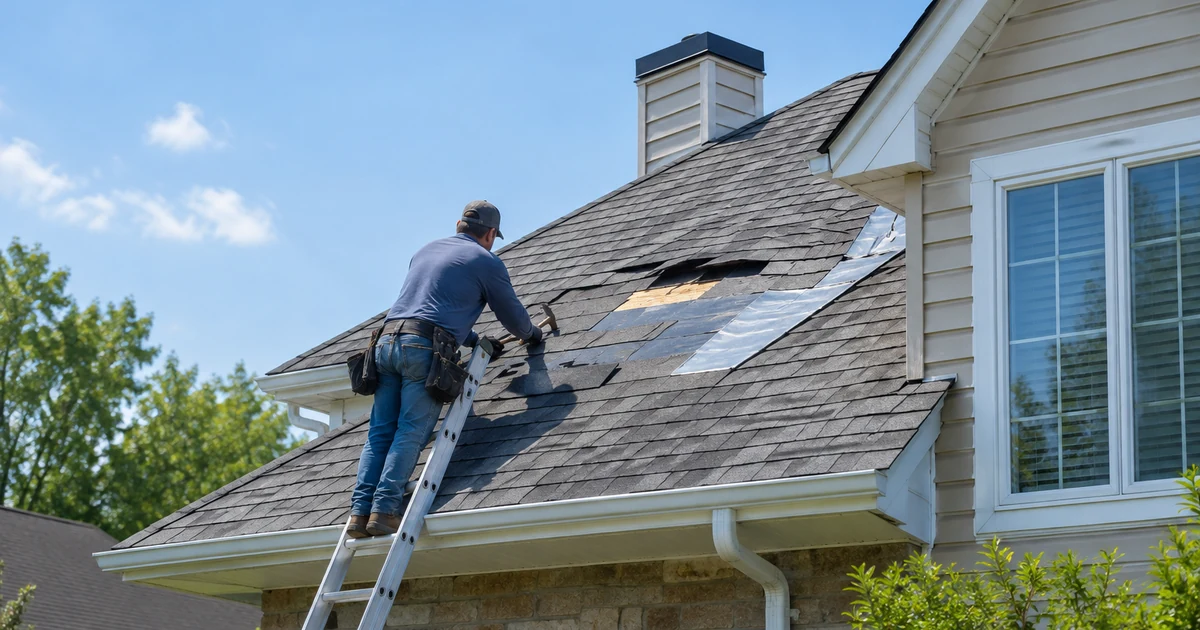
| Missing or damaged shingles | $100 – $1,000 | A few shingles up to roughly 100 sq ft of shingles |
| Flashing repair | $200 – $500 | Resealing or replacing flashing at walls, chimneys, skylights |
| Ridge cap repair | $200 – $750 | Replacing cracked or missing ridge shingles |
| Valley repair | $200 – $850 | Re-lining and re-shingling a worn roof valley |
| Skylight leak | $300 – $800 | New flashing kit and sealing around the skylight |
| Roof leak (find and fix) | $360 – $1,550 | Tracing the leak source, replacing shingles, underlayment, flashing |
| Soffit and fascia repair | $500 – $2,600+ | Replacing rotted fascia boards and soffit panels |
| Hail or storm damage | $700 – $4,000 | Multiple slopes of damaged shingles, vents, and flashing |
| Rotted decking / water damage | $800 – $5,000+ | Tearing off shingles, replacing plywood/OSB, re-roofing the area |
| Sagging roof | $1,000 – $5,000 | Sistering rafters, adding supports, replacing decking |
Most calls fall in the leak, flashing, and shingle categories, which is why the national average sits around $1,150. Anything that exposes the roof deck costs more, because the roofer has to remove surrounding shingles, replace sheathing (about $200 to $500 per 100 sq ft), and weave new shingles back in.
If more than a quarter to a third of the roof is damaged, or the roof is near the end of its life, many roofers will steer you toward a partial or full replacement instead. Our metal roof cost guide covers one popular long-life replacement option.
Roof repair cost by roofing material
Material matters almost as much as the repair itself. Asphalt shingles are the cheapest to match and install. Tile and slate require specialists and careful handling, and replacement pieces can be hard to source. Metal panels often have to be ordered to length.
| Roofing material | Average repair cost | Notes |
|---|---|---|
| Flat roof (TPO, EPDM, modified bitumen) | $400 | Patches are fast; ponding water issues cost more |
| Wood shake | $750 | Individual shakes can be split out and replaced |
| Asphalt shingles | $875 – $975 | Easiest to match; color may differ on older roofs |
| Tile (clay or concrete) | $1,000 – $1,350 | Broken tiles are common when walked on |
| Metal | $1,580 – $1,700 | Panel replacement, fastener and seam resealing |
| Slate | $1,625 – $1,800 | Requires a slate specialist; salvaged slate may be needed |
Roof repair cost by damaged area
When damage covers a larger patch, roofers often price by the square foot of roof being repaired, commonly $3.50 to $12 per sq ft depending on material and how much decking is involved.
| Area repaired | Typical cost |
|---|---|
| 100 sq ft | $350 – $1,200 |
| 200 sq ft | $700 – $2,400 |
| 500 sq ft | $1,750 – $6,000 |
| 1,000 sq ft | $3,500 – $12,000 |
At around 500 to 1,000 sq ft, you are into partial re-roofing territory, and it is worth getting a replacement quote for comparison.
Cost Breakdown: Materials vs. Labor
Roof repair is labor-heavy. Materials for a typical patch are inexpensive, but the time to set up safely, find the real source of a leak, and blend the repair into the existing roof adds up. Labor usually represents 60% or more of the bill.
- Labor: roofers generally charge $40 to $100 per hour, with $45 to $75 per hour common in many markets.
- Minimum service call: many contractors charge $150 to $300 as a minimum, even for a 30-minute fix.
- Materials: a bundle of shingles, underlayment, flashing, sealant, and fasteners for a small repair often totals under $200. Replacement decking runs about $200 to $500 per 100 sq ft installed.
- Roof inspection: $75 to $600, often credited toward the repair if you hire the same company.
- Permit: usually not needed for small patches; larger repairs may require one at roughly $70 to $500 depending on the jurisdiction.
- Emergency or after-hours service: expect an extra $100 to $300 or more for tarping or same-day repairs during storms.
Other Factors That Affect Roof Repair Prices
Roof height and pitch
A walkable, single-story roof is the cheapest to work on. Steep pitches and two- or three-story homes require harnesses, roof jacks, and sometimes extra crew members, which increases labor time. Our calculator adds a percentage for these situations to reflect the extra setup.
Extent of hidden damage
Leaks often travel along rafters before they show up on the ceiling. What looks like a small stain can turn out to be soft decking or rotted fascia once shingles are lifted. Good contractors will quote the visible repair and give a per-sheet or per-square-foot price for any decking they find damaged.
Matching existing materials
Discontinued shingle colors, specialty tile profiles, and reclaimed slate can be hard to find. Matching may require ordering or using salvaged materials, which adds cost and time.
Interior repairs
The roof repair price rarely includes fixing stained or sagging ceilings inside. If water got into the house, budget separately for drywall repair and, if needed, insulation replacement.
Gutters and drainage
Clogged or failing gutters cause a surprising number of fascia and roof-edge leaks. Gutter repairs typically run $200 to $600; if yours are beyond saving, see our gutter installation cost guide.
Location and season
Labor rates are higher in large metro areas and the Northeast and West Coast. Prices also climb right after major storms, when roofers are booked out for weeks. Late fall and winter are often slower for roofers outside of storm season.
Before you hire: get at least three written, itemized quotes from licensed and insured local pros. Prices for the same job often differ by 30% or more, and comparing line items is the fastest way to spot padding or missing work.
Repair vs. Replace Your Roof
A repair makes sense when the damage is localized and the rest of the roof is in good shape. Replacement is usually the smarter money when the roof is old or the damage is widespread.
Repair when
- The damage is limited to one area, such as a few shingles, a vent boot, or a single flashing detail.
- The roof is less than about halfway through its expected lifespan (asphalt shingles typically last 15 to 30 years).
- The decking underneath is solid, with no widespread soft spots.
Replace when
- Shingles are curling, cracking, or losing granules across multiple slopes.
- You have recurring leaks in different places.
- Repair quotes approach 25% to 30% of the cost of a new roof.
- The roof is near or past the end of its rated life.
Signs you need a roof repair now
- Water stains on ceilings or in the attic, especially after heavy rain
- Missing, lifted, or cracked shingles after a windstorm
- Daylight visible through the roof boards in the attic
- Rusted, loose, or missing flashing around chimneys and skylights
- Granules piling up in gutters or at downspouts
DIY vs. hiring a pro
Swapping a pipe boot or re-nailing a few shingles on a low, walkable roof is a manageable DIY job if you use fall protection and work in dry weather. Anything on a steep or high roof, and any leak you cannot trace, is best left to a licensed roofer. Falls from roofs are a leading cause of serious construction injuries, and a botched DIY repair can void a shingle manufacturer’s warranty.
How to Save Money on Roof Repair
- Act fast. A $300 flashing repair left for a season can turn into a $3,000 decking and drywall job.
- Get two or three quotes. Ask each roofer to itemize labor, materials, and any decking allowance so you can compare fairly.
- Check your homeowners insurance. Sudden damage from wind, hail, or a fallen tree is often covered, minus your deductible; wear and tear is not.
- Bundle small repairs. If you are paying a minimum service call anyway, have the roofer reseal vents, check flashing, and replace any loose shingles in the same visit.
- Keep leftover shingles. Spare bundles from the original installation make repairs cheaper and easier to match.
- Schedule non-urgent work off-season. Roofers are often more flexible on price outside of spring storm season and the late-summer rush.
- Maintain your gutters and attic ventilation. Clean gutters and a well-vented, properly insulated attic reduce ice dams and edge rot. Our attic insulation cost guide explains what upgrades cost.
Frequently Asked Questions
How much does it cost to fix a roof leak?
Most roof leak repairs cost $360 to $1,550. A simple flashing or vent boot fix can be under $500, while a leak that has rotted the decking underneath can run $1,000 to $5,000 or more once sheathing and interior repairs are included.
How much do roofers charge per hour?
Roofers typically charge $40 to $100 per hour, with $45 to $75 common. Many also have a minimum service fee of $150 to $300, so even a quick repair rarely costs less than that.
Does homeowners insurance cover roof repair?
Insurance usually covers sudden damage from wind, hail, fire, or falling trees, minus your deductible. It generally does not pay for wear and tear, age-related leaks, or damage caused by lack of maintenance. Check your policy for roof age limits or cosmetic-damage exclusions.
Is it worth repairing a 20-year-old roof?
It can be if the damage is small and localized. But asphalt shingle roofs typically last 15 to 30 years, so if the roof shows widespread wear or repair quotes approach 25% to 30% of replacement cost, replacing is often the better value.
How much does it cost to replace a few shingles?
Replacing a small number of shingles (up to about 25) usually costs $100 to $300. Replacing around 100 sq ft of shingles typically costs $350 to $1,000, depending on roof pitch and how well the new shingles can be matched.
Can I repair my roof myself?
Small fixes like a vent boot or a few shingles on a low, walkable roof are doable with proper fall protection. Steep or high roofs, hidden leaks, and anything involving decking are safer and more reliable to leave to a licensed roofer, and DIY work can affect shingle warranties.